
1. Group Technical Skills Cleanly (Avoid Buzzword Soup)
Organize skills into 3–4 scannable categories and list only tools you are comfortable discussing in an interview:
- Languages: TypeScript, Go, Python, SQL.
- Frameworks & Libraries: React, Node.js, PostgreSQL, Redis, GraphQL.
- Infrastructure & Tooling: Docker, Kubernetes, AWS/Cloudflare, GitHub Actions, OpenTelemetry.
2. Showcase Technical Complexity, Not Just Ticket Completion
Strong engineering bullets connect an architectural decision directly to reliability, speed, or developer velocity:
- Context & scale: Mention traffic, data volume, team size, or reliability requirements.
- Engineering decision: Highlight caching strategies, schema redesigns, CI speedups, or bundle reductions.
- Measurable result: P99 latency, LCP, build time, crash rate, or infrastructure cost saved.
3. Make GitHub & Open Source Easy to Verify
Include clickable links to your GitHub profile, live demos, or notable pull requests. Pin your cleanest repositories with crisp READMEs before sending applications.
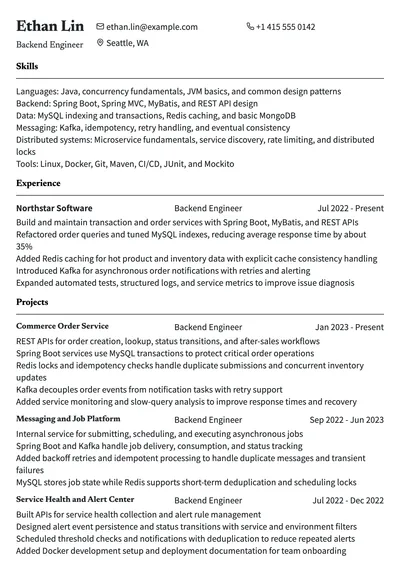 Classic Single-Column Resume Template
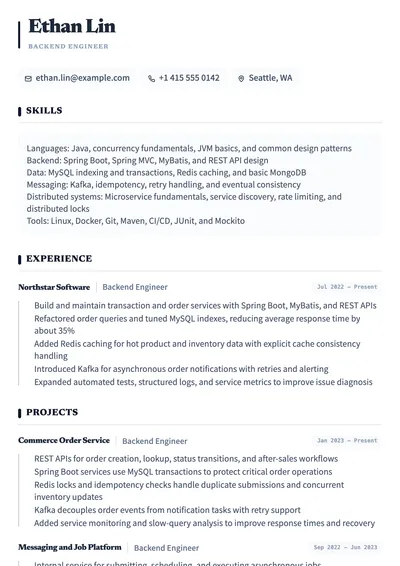 Swiss Grid Resume Template
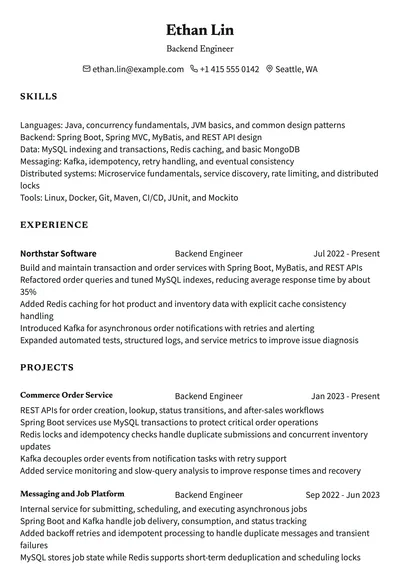 Minimalist Resume Template