
1. What STAR Means on a One-Page Resume
On a resume, STAR is not a long paragraph—it is a tight 1–2 line formula:
- Situation & Task: Brief context or problem scale (only a few words).
- Action: The specific decision, technical approach, or collaboration you drove.
- Result: Measurable impact—speed, revenue, conversion, reliability, or hours saved.
2. Before & After Examples Across Roles
Notice how specificity and outcomes immediately elevate each line:
- Engineering — Before: Worked on frontend performance and bug fixes. → After: Cut checkout page LCP from 4.2s to 1.5s via route code-splitting and image optimization, lifting mobile conversion by 6.3%.
- Product — Before: Redesigned mobile checkout flow to improve UX. → After: Simplified mobile checkout from 5 steps to 3 based on 12 usability sessions, raising completion rate by 11%.
- Marketing — Before: Managed social media content and campaigns. → After: Built a 28-post educational content series generating 450K organic views and 3,200 product sign-ups in 90 days.
- Student / New Grad — Before: Built a campus marketplace app for class. → After: Led a 3-person team to ship a campus marketplace web app used by 800+ students with 190 completed listings.
3. How to Quantify Impact When You Don't Own Revenue
You can still use honest, concrete numbers even outside sales or growth roles:
- Time saved: Automated a weekly manual report from 2 hours down to 5 minutes.
- Scale handled: Supported 5 internal teams, 100K daily API calls, or 30+ reusable components.
- Quality improved: Reduced production incidents by 40% or raised test coverage from 20% to 75%.
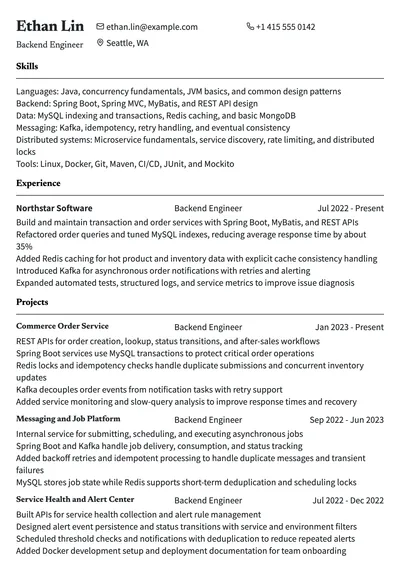 Classic Single-Column Resume Template
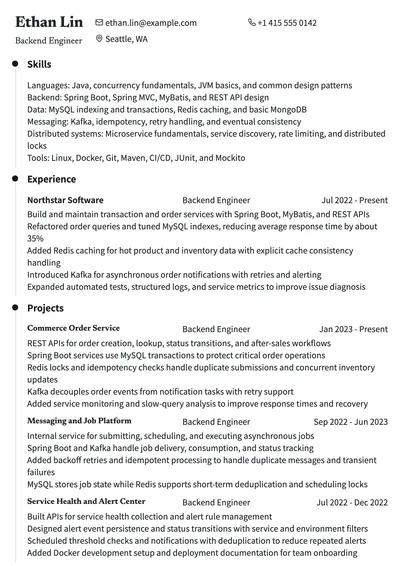 Timeline Resume Template
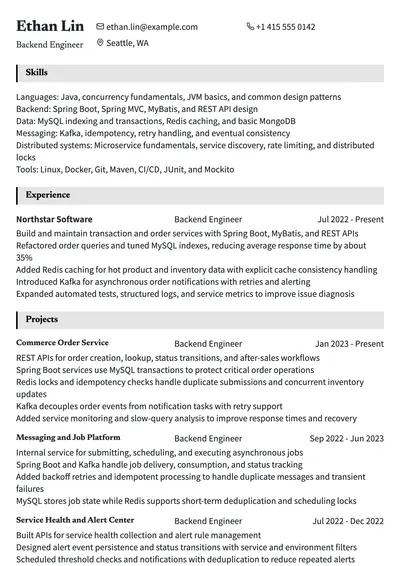 Left-Right Split Resume Template